What Is a UWILD Inspection?
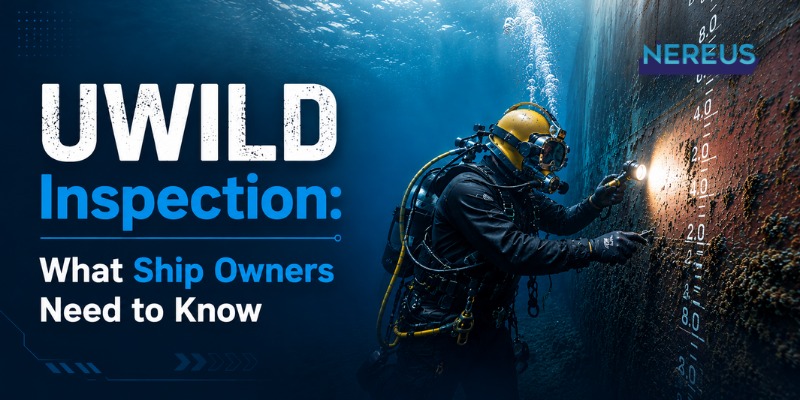
UWILD stands for Underwater Inspection in Lieu of Drydocking. It is an underwater survey of a vessel carried out while the ship remains afloat, instead of conducting a conventional drydock examination where permitted by the applicable flag, class, and regulatory requirements.
A UWILD inspection allows qualified underwater inspection teams to examine important parts of a vessel’s underwater structure and equipment without necessarily taking the vessel into drydock.
For ship owners and operators, this can help reduce vessel downtime, simplify scheduling, and potentially lower costs when the vessel and survey meet the requirements of the relevant classification society or maritime authority.
However, UWILD is not automatically a replacement for every drydock inspection. Acceptance depends on the vessel, applicable regulations, class requirements, condition of the hull, previous survey history, and approval of the relevant authority or classification society. For example, U.S. Coast Guard regulations specify eligibility and application requirements for certain vessels, while its current UWILD guidance provides additional implementation guidance.
Why Is UWILD Important for Ship Owners?
Drydocking a vessel can involve significant costs, planning, and operational downtime. An approved underwater survey can provide an alternative inspection route for eligible vessels.
The main advantages of UWILD can include:
- Reduced vessel downtime
- Less disruption to vessel operations
- Potential reduction in drydock-related costs
- Flexible inspection planning
- Early identification of underwater defects
- Detailed visual documentation of underwater conditions
- Inspection of hull and underwater appendages while the vessel remains afloat
The objective is not simply to avoid drydocking. The primary objective is to verify the condition of the vessel’s underwater areas safely, accurately and in accordance with the applicable survey requirements.
What Does a UWILD Inspection Check?
The exact scope depends on the vessel, class requirements, and survey instructions. A typical underwater inspection may examine areas such as:
- Vessel Hull
The underwater hull is inspected for visible defects such as:
- Damage
- Corrosion
- Cracks
- Deformation
- Marine growth
- Coating deterioration
- Areas requiring further investigation
- Propeller
The propeller can be examined for visible damage, deformation, cracking, fouling and other abnormalities.
- Rudder
The rudder and associated underwater components may be inspected for damage, corrosion, excessive wear or other visible defects.
- Sea Chests
Sea chests and their associated areas may require inspection to identify fouling, damage or other underwater conditions.
- Hull Appendages
Depending on the survey scope, underwater appendages and fittings can also be examined.
- Anodes and Hull Protection
The condition of anodes and other hull protection arrangements may be assessed as part of the underwater survey.
- Overboard Valves and Pipes
Underwater inspection can also include overboard pipes, valves and related fittings when required by the survey scope.
Nereus Subsea’s survey and inspection services include UWILD/IWS, sea chest internal inspection, hull coating inspection, overboard pipe and overboard valve inspections, clearance measurements and surveys of marine structures.
How Is a UWILD Inspection Carried Out?
A UWILD inspection generally follows a planned process designed around the requirements of the attending surveyor, classification society or maritime authority.
Step 1: Review the Vessel and Survey Requirements
Before the inspection, the vessel’s records, previous survey reports, class requirements and applicable regulatory requirements are reviewed.
This helps determine whether an underwater survey is acceptable and what areas need to be inspected.
Step 2: Prepare the Vessel
The vessel is positioned at a suitable location and prepared for the inspection.
Safety considerations, water conditions, vessel condition, underwater visibility and access to inspection areas must be assessed before diving operations begin.
Step 3: Conduct the Underwater Inspection
Qualified commercial divers or suitable underwater inspection equipment are deployed to inspect the vessel.
Depending on the project requirements, inspections may be performed using divers, remotely operated vehicles (ROVs), or a combination of methods.
Step 4: Live Video and Documentation
Underwater video and photographic evidence can provide the attending surveyor and vessel representatives with a clear view of the inspected areas.
Modern ROV systems can further improve visibility, positioning and inspection efficiency. Nereus Subsea, for example, provides ROV inspection services using the Deep Trekker Revolution ROV, equipped with a 4K rotating camera, laser scaler, grabber arm and navigation support.
Step 5: Surveyor Assessment
The attending surveyor evaluates the inspection findings against the applicable class or regulatory requirements.
If defects are identified, additional inspection, measurements, repairs or corrective action may be required.
Step 6: Inspection Report
The inspection findings are documented and submitted according to the requirements of the relevant authority or classification society.
What Is the Difference Between UWILD and Drydock Inspection?
The biggest difference is where the vessel is inspected.
| UWILD Inspection | Drydock Inspection |
| Vessel remains afloat | Vessel is taken into drydock |
| Underwater areas inspected in water | Hull becomes accessible above water |
| Divers and/or ROVs may be used | Direct physical access to hull |
| Can reduce operational downtime when accepted | Generally requires more operational planning |
| Subject to class/flag approval and vessel eligibility | Conventional inspection method |
| Underwater video and documentation can support inspection | Direct visual examination of exposed hull |
UWILD should therefore be viewed as an alternative inspection method where permitted, rather than a universal substitute for drydocking.
How Often Is UWILD Required?
There is no single UWILD interval that applies to every vessel worldwide.
Inspection intervals depend on the vessel’s classification and applicable statutory requirements.
In some regulatory frameworks, UWILD can be used at alternating intervals between drydock examinations. For example, U.S. Coast Guard guidance describes UWILD as an optional compliance route that can allow eligible vessels to alternate underwater surveys with drydock examinations.
Therefore, ship owners should not rely on a generic inspection calendar. The correct interval should be confirmed with the vessel’s classification society and flag administration.
What Are the Benefits of UWILD for Ship Owners?
Lower Operational Disruption
Because the vessel remains afloat, UWILD can potentially reduce disruption associated with moving the vessel into drydock.
Potential Cost Savings
Avoiding or postponing an eligible drydock event can reduce certain docking, port and associated operational expenses.
Faster Inspection Planning
Underwater inspections can sometimes be arranged around vessel schedules more flexibly than drydock availability.
Early Defect Detection
Regular underwater inspection can help identify hull damage, coating deterioration, corrosion, fouling and underwater equipment issues before they develop into more serious problems.
Better Vessel Maintenance Planning
Inspection findings can help technical teams plan underwater repairs, cleaning, propeller polishing, anode replacement and other maintenance activities.
How Should Ship Owners Prepare for a UWILD Inspection?
Good preparation can make the inspection more efficient.
Before the Inspection
Ship owners or technical managers should:
- Confirm UWILD eligibility with the relevant class or authority.
- Review previous drydock and underwater inspection reports.
- Prepare vessel drawings and relevant technical documentation.
- Confirm the required inspection scope.
- Check the vessel’s underwater condition.
- Arrange suitable diving or ROV equipment.
- Confirm communication and video requirements.
- Select an appropriate inspection location.
- Ensure all required personnel and documentation are available.
- Coordinate the inspection schedule with the attending surveyor.
During the Inspection
The inspection team should maintain:
- Clear communication
- Proper safety procedures
- Accurate location references
- High-quality video documentation
- Systematic inspection coverage
- Clear reporting of defects
Regulatory requirements may specifically call for procedures covering the survey method, inspection location, diver or ROV positioning, and examination of through-hull fittings and appurtenances.
Diver Inspection vs ROV Inspection: Which Is Better?
There is no single answer because the best method depends on the vessel, inspection scope, water conditions, and survey requirements.
Diver-Based UWILD
Commercial divers can provide direct access to underwater areas and can perform certain hands-on inspection or maintenance tasks.
ROV-Based Inspection
ROVs can provide live underwater imagery while reducing the need for personnel to enter the water.
Modern ROVs can also provide useful tools such as high-resolution cameras, positioning systems and laser scaling.
For example, Nereus Subsea’s ROV service uses a Deep Trekker Revolution ROV with a 4K rotating camera, laser scaler, grabber arm and navigation capabilities for underwater inspection and maintenance applications.
The Best Approach
For some projects, a combination of ROV and commercial diving capabilities may provide the most practical solution.
The final inspection method should always meet the requirements of the attending surveyor and applicable class or statutory authority.
FAQ
What does UWILD stand for?
UWILD stands for Underwater Inspection in Lieu of Drydocking. It refers to an underwater survey carried out while a vessel remains afloat, where permitted by the applicable requirements.
What is the purpose of a UWILD inspection?
The purpose is to assess the condition of a vessel’s underwater hull and associated components without necessarily placing the vessel in drydock.
Can UWILD completely replace drydocking?
No. UWILD is not a universal replacement for drydocking. Its acceptance depends on the applicable classification, flag-state and regulatory requirements.
Is UWILD cheaper than drydocking?
It can reduce certain docking and operational costs for eligible vessels, but the total cost depends on the vessel, inspection scope, location, equipment and required follow-up work.
Can an ROV be used for UWILD?
Yes, ROVs may be used for underwater inspection where permitted and suitable for the inspection scope. Requirements should be confirmed with the relevant class or authority.
What parts of a ship are inspected during UWILD?
Depending on the approved scope, inspection can include the underwater hull, propeller, rudder, sea chests, anodes, overboard fittings, valves, pipes and other underwater appendages.
How long does a UWILD inspection take?
There is no standard duration. The time depends on vessel size, underwater visibility, inspection scope, hull condition, water conditions, equipment and surveyor requirements.
Who approves a UWILD inspection?
Approval depends on the applicable regulatory framework. It may involve the vessel’s classification society, flag administration, or maritime authority.
Is UWILD suitable for every ship?
No. Vessel eligibility depends on applicable class and statutory requirements, vessel condition, and other factors.
Looking for UWILD Inspection Services?
UWILD inspection helps ship owners maintain vessel safety while reducing downtime and supporting efficient maintenance. With the right inspection scope, qualified professionals, suitable equipment, and proper compliance, UWILD provides a reliable way to assess a vessel’s underwater condition while it remains afloat.
Nereus Subsea provides UWILD/IWS and underwater survey and inspection services, supported by commercial diving and ROV capabilities. Its inspection portfolio also includes hull coating inspection, CCTV inspection, sea chest internal inspection, clearance measurements, overboard pipe and valve inspections, and marine structure surveys.
Contact Nereus Subsea to discuss your vessel’s underwater inspection requirements and plan the appropriate survey scope with your technical and classification teams.