
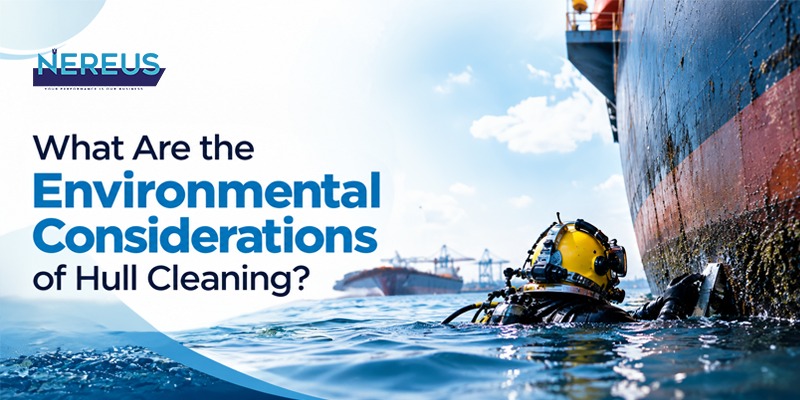
A vessel’s hull spends most of its operational life underwater, where it is constantly exposed to marine organisms and changing water conditions. Over time, algae, slime, barnacles, and other organisms can attach themselves to the hull. This buildup, known as biofouling, can affect vessel performance, increase resistance, and contribute to higher fuel consumption.
Underwater hull cleaning is therefore an important part of vessel maintenance. However, underwater cleaning is not only about removing marine growth. The way the cleaning is carried out can also affect the surrounding marine environment. From preventing the spread of invasive species to protecting anti-fouling coatings, several environmental factors need to be considered before an underwater cleaning operation begins.
For shipowners and operators, understanding these considerations can help them make better decisions about hull maintenance and choose cleaning methods that balance vessel performance with environmental responsibility.
Understanding Biofouling on Ships
Biofouling refers to the accumulation of marine organisms on surfaces that are submerged in water. On ships, this can occur on the hull as well as on other underwater areas such as propellers, rudders, sea chests and niche areas.
The amount of fouling a vessel develops depends on several factors, including where the vessel operates, how long it remains in certain locations, water temperature, vessel speed, hull condition and the type of anti-fouling system installed.
Light fouling may initially appear as a thin layer of slime or algae. Over time, more firmly attached organisms such as barnacles and mussels can develop. As this growth increases, the underwater surface becomes less smooth, which can increase drag and affect the efficiency of the vessel.
This is why regular inspection and appropriate maintenance are important parts of effective biofouling management.
Why Does Hull Cleaning Matter for the Environment?
At first, hull cleaning may seem like a straightforward maintenance activity. However, there is a wider environmental consideration because marine organisms attached to a vessel can potentially be transported from one geographical area to another.
The International Maritime Organization has identified ships’ biofouling as a pathway through which invasive aquatic species can be introduced into new environments. These organisms can potentially affect native species and marine ecosystems when they become established outside their natural range.
This makes responsible biofouling management important for vessels that travel between different ports and regions.
Cleaning can help control accumulated growth, but the process itself should also be carefully planned. The type of fouling present, the location of the vessel, and the potential for organisms to be released during cleaning all need to be considered.
Protecting Marine Life During Underwater Cleaning
The surrounding marine environment should always be considered when planning underwater cleaning.
When marine growth is removed from a hull, organisms and other material may be released into the surrounding water. The potential impact depends on the type and amount of fouling, the cleaning technology being used, and the location where the work takes place.
Responsible cleaning practices aim to reduce unnecessary release of biological material and other substances. Depending on the circumstances, appropriate collection or control measures may also be required.
The IMO’s guidance on in-water cleaning highlights the importance of considering environmental risks associated with the removal of biofouling from ships. In 2025, the IMO issued dedicated guidance covering the planning and conduct of in-water cleaning operations.
This reflects the maritime industry’s growing focus on carrying out underwater maintenance in a more environmentally responsible manner.
Protecting the Vessel’s Anti-Fouling Coating
Environmental responsibility also means protecting the vessel itself.
Most commercial vessels use anti-fouling systems to reduce the accumulation of marine organisms on underwater surfaces. These coatings are an important part of a ship’s biofouling management strategy.
However, unsuitable cleaning methods can damage the coating. Excessive pressure or an inappropriate cleaning tool may remove or weaken parts of the coating along with the marine growth.
The IMO recognizes that in-water cleaning can potentially damage anti-fouling coatings and may reduce their service life.
A suitable cleaning method should therefore consider the type and condition of the coating before work begins. The objective should be to remove unwanted growth while avoiding unnecessary damage to the underwater surface.
This is particularly important because damaged coatings may require additional maintenance and can affect the vessel’s future protection against biofouling.
How Hull Cleaning Can Improve Vessel Efficiency
Environmental performance and vessel efficiency are closely connected.
As marine growth accumulates, the hull can become rougher and create additional resistance as the vessel moves through the water. The propulsion system may then need to use more power to maintain the same speed.
Maintaining an appropriately clean underwater hull can help reduce this additional resistance. Effective biofouling management can therefore contribute to improved hydrodynamic performance and fuel efficiency.
The IMO recognizes maintaining a clean hull as one factor that can contribute to improved fuel efficiency and reduced greenhouse gas emissions.
This means that regular inspection and appropriate underwater hull cleaning can support both vessel maintenance and environmental objectives.
Why Regular Underwater Inspection Is Important
Cleaning decisions should ideally be based on the actual condition of the vessel rather than a fixed schedule alone.
An underwater inspection can help identify the amount and type of marine growth present on the hull. It can also provide an opportunity to assess the condition of the coating and underwater components.
Early identification of fouling can help vessel operators decide whether cleaning is required and what type of cleaning approach may be appropriate.
A planned maintenance strategy can also help avoid situations where heavy fouling requires more intensive cleaning. In this way, inspection and cleaning can work together as part of a vessel’s broader maintenance programme.
Environmental Considerations for Vessels Operating in the UAE
The UAE is an important maritime centre, with commercial vessels regularly operating through ports and offshore locations across the country. Vessels may also travel between UAE waters and other regions, making biofouling management an important consideration.
Local conditions can influence how quickly marine growth develops and what type of fouling may be present. Vessel operators therefore need to consider the actual condition of the hull and the location of the vessel when planning maintenance.
For vessels requiring underwater hull cleaning in the UAE, professional assessment can help determine an appropriate approach while taking environmental and operational requirements into consideration.
The objective is not simply to remove as much marine growth as possible. Effective maintenance should protect the vessel, support operational efficiency and minimize unnecessary impact on the surrounding marine environment.
Choosing the Right Hull Cleaning Method
There is no single cleaning method that is suitable for every vessel.
The appropriate approach can depend on the vessel’s hull coating, type and level of biofouling, underwater condition, location and operational requirements.
Light slime may require a different approach from heavy barnacle growth. Similarly, a sensitive or specialized coating may require different cleaning equipment from a conventional underwater surface.
This is why professional assessment is important before beginning the operation.
An experienced underwater service provider can evaluate the condition of the hull and recommend an appropriate cleaning approach based on the vessel’s specific requirements.
What Should Shipowners Consider When Choosing a Service Provider?
When selecting a company for hull cleaning in the UAE, shipowners should look beyond the basic ability to remove marine growth.
Experience with commercial vessels, underwater inspections, different hull coatings, and marine conditions can be valuable. It is also important to understand how the company approaches environmental considerations during underwater operations.
A professional provider should be able to discuss the vessel’s condition, cleaning requirements, applicable safety considerations and the potential environmental implications of the work.
Good communication between the vessel operator and underwater service provider can also help ensure that cleaning is carried out at an appropriate time and location.
Underwater Hull Cleaning Services in the UAE
Nereus Subsea provides underwater marine services for vessels operating in the UAE, including underwater hull cleaning, inspection and maintenance.
Its underwater services are intended to help vessel operators manage marine growth and maintain underwater components without unnecessarily disrupting vessel operations.
For a vessel requiring cleaning, the process can begin with assessing the underwater condition and determining the appropriate maintenance requirements. This allows the cleaning operation to be planned around the vessel’s actual condition rather than relying on a one-size-fits-all approach.
For shipowners and operators looking for professional underwater hull cleaning, choosing an experienced underwater service provider can help address biofouling while keeping environmental considerations in mind.
Frequently Asked Questions About Hull Cleaning
What are the environmental considerations of hull cleaning?
The main considerations include the potential release of marine organisms, invasive aquatic species, coating particles and other material into the surrounding water. The vessel’s fouling condition, cleaning method, location, and anti-fouling coating should all be considered before cleaning begins.
Can underwater hull cleaning affect marine life?
Yes. If marine organisms or other material are released during cleaning, they can potentially affect the surrounding environment. Proper planning and suitable cleaning practices can help manage these risks.
Why is biofouling a concern for ships?
Biofouling can increase resistance and affect vessel efficiency. It can also allow marine organisms to travel with a vessel between different marine environments, creating a potential pathway for invasive species.
Does hull cleaning improve fuel efficiency?
Managing excessive marine growth can reduce the additional resistance caused by biofouling. Maintaining an appropriate hull condition can therefore support vessel efficiency and may help reduce fuel consumption.
Can hull cleaning damage anti-fouling paint?
Yes, inappropriate cleaning techniques can damage anti-fouling coatings. The cleaning method should be selected according to the type and condition of the coating and the level of marine growth present.
How often should a vessel be cleaned?
There is no universal cleaning frequency for every vessel. Fouling can vary according to the vessel’s operating route, location, water conditions, hull coating and maintenance history. Regular inspection can help determine when cleaning is appropriate.
Conclusion
Hull cleaning plays an important role in maintaining vessel performance, but it should always be approached with environmental responsibility in mind. Biofouling can affect fuel efficiency and vessel performance, while organisms attached to ships can potentially be transported between different marine environments.
For vessels operating in the UAE, professional underwater hull cleaning services can help manage marine growth while taking the vessel’s condition, operational requirements and environmental considerations into account.
Nereus Subsea provides underwater hull cleaning, inspection, and marine maintenance services across the UAE. With the right approach to biofouling management, vessel operators can maintain underwater performance while supporting more responsible marine operations.