
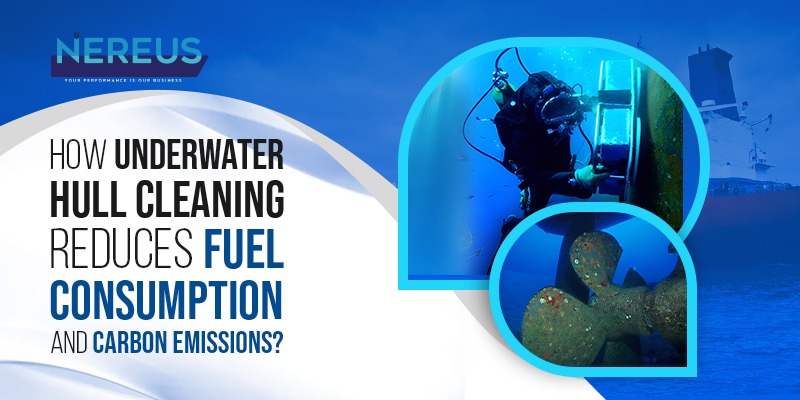
Every ship operator aims to improve fuel efficiency, reduce operating costs, and meet increasingly stringent environmental regulations. While modern engines, voyage optimization, and alternative fuels all contribute to these goals, one of the most effective and often underestimated solutions lies beneath the waterline: underwater hull cleaning.
Marine growth on a vessel’s hull can significantly increase hydrodynamic drag, forcing engines to work harder and consume more fuel. Regular underwater hull cleaning helps restore hull performance, improve vessel efficiency, and reduce greenhouse gas emissions without interrupting vessel operations.
Why Does Hull Fouling Increase Fuel Consumption?
As vessels operate in seawater, marine organisms such as algae, slime, barnacles, mussels, and seaweed begin attaching to the hull. This accumulation, known as biofouling, creates a rough surface that increases water resistance.
Even a thin layer of slime can negatively impact a vessel’s performance. As biofouling becomes more severe, the vessel requires additional engine power to maintain the same speed, resulting in:
- Increased fuel consumption
- Higher engine load
- Reduced vessel speed
- Greater greenhouse gas emissions
- Higher operating costs
Studies across the maritime industry have consistently shown that hull fouling can lead to significant increases in fuel consumption, making proactive hull maintenance an essential part of fleet management.
How Underwater Hull Cleaning Improves Vessel Efficiency
Professional underwater hull cleaning removes marine growth while the vessel remains afloat, restoring a smoother hull surface and improving hydrodynamic performance.
The benefits include:
Reduced Hydrodynamic Drag
A clean hull moves more efficiently through the water, allowing the vessel to maintain speed with less engine power.
Lower Fuel Consumption
Reduced resistance means engines consume less fuel during voyages, helping operators lower daily fuel expenses.
Improved Vessel Performance
Hull cleaning restores design efficiency, allowing ships to achieve optimal speed and manoeuvrability.
Extended Coating Life
Routine cleaning helps maintain the effectiveness of hull coatings by preventing excessive biofouling buildup that can damage protective surfaces.
Reduced Maintenance Costs
Regular underwater maintenance minimizes the likelihood of extensive cleaning or repairs during scheduled dry docking.
The Connection Between Hull Cleaning and Carbon Emissions
Fuel consumption and carbon emissions are directly linked. The more fuel a vessel burns, the more carbon dioxide (CO₂) it releases into the atmosphere.
By reducing hull resistance, underwater hull cleaning contributes to:
- Lower CO₂ emissions
- Improved energy efficiency
- Reduced environmental footprint
- Better compliance with sustainability initiatives
As the maritime industry continues its transition toward decarbonization, maintaining a clean hull has become an important operational strategy alongside fuel optimization and energy-efficient technologies.
Supporting Compliance with Environmental Goals
International shipping is under increasing pressure to reduce emissions and improve operational efficiency. Vessel operators are adopting various measures to meet these expectations, including:
- Energy efficiency improvements
- Voyage optimization
- Efficient hull maintenance
- Regular underwater inspections
- Biofouling management
A proactive hull maintenance program supports these initiatives by helping vessels operate at peak efficiency while minimizing unnecessary fuel consumption.
Why Regular Underwater Hull Cleaning Matters
Waiting until heavy marine growth develops can significantly increase cleaning complexity and operational costs.
Instead, implementing a scheduled underwater hull cleaning program offers several advantages:
- Consistent fuel efficiency
- Reduced operational expenses
- Better vessel availability
- Improved safety and performance
- Longer intervals between major maintenance activities
Regular inspections also allow divers to identify early signs of damage, corrosion, coating deterioration, or marine growth before they become larger maintenance concerns.
Choosing an Experienced Underwater Hull Cleaning Partner
Effective underwater hull cleaning requires experienced commercial divers, specialized equipment, and strict adherence to safety and environmental standards.
A professional service provider should offer:
- Certified commercial diving teams
- Safe and environmentally responsible cleaning practices
- Detailed inspection and reporting
- Global operational capability
- Compliance with applicable port and regulatory requirements
Partnering with an experienced underwater service provider helps ensure cleaning activities deliver measurable performance improvements while protecting hull coatings and vessel integrity.
Why Choose Nereus Subsea?
Nereus Subsea delivers professional underwater hull cleaning, ship repair, and inspection services for commercial vessels across Singapore, the UAE, and worldwide.
With experienced diving teams, advanced underwater technology, and a commitment to safety and quality, Nereus Subsea helps ship owners and fleet managers:
- Improve fuel efficiency
- Reduce carbon emissions
- Maintain optimal vessel performance
- Extend hull coating life
- Minimize operational downtime
- Support sustainable maritime operations
Whether your vessel requires routine maintenance or specialized underwater services, our team delivers reliable solutions tailored to your operational requirements.
Frequently Asked Questions (FAQ)
How does underwater hull cleaning reduce fuel consumption?
Removing marine growth decreases hydrodynamic drag, allowing the vessel to move more efficiently through the water with less engine power and lower fuel consumption.
How often should a commercial vessel undergo hull cleaning?
The ideal frequency depends on operating conditions, trading routes, vessel type, and biofouling levels. Regular underwater inspections help determine the optimal cleaning schedule.
Can underwater hull cleaning reduce carbon emissions?
Yes. Lower fuel consumption directly reduces carbon dioxide (CO₂) emissions, supporting vessel efficiency and environmental sustainability.
Does hull cleaning require dry docking?
No. Professional underwater hull cleaning can be performed while the vessel remains afloat, reducing downtime and operational disruption.
What are the benefits of regular underwater hull maintenance?
Regular maintenance improves fuel efficiency, reduces operating costs, enhances vessel performance, extends coating life, supports regulatory compliance, and helps prevent excessive marine growth.
A clean hull is more than a maintenance requirement; it’s a strategic investment in operational efficiency, cost savings, and environmental performance. By reducing hydrodynamic drag, professional underwater hull cleaning helps vessels consume less fuel, emit fewer greenhouse gases, and maintain peak performance throughout their service life.
For ship owners and fleet managers seeking reliable underwater maintenance solutions, partnering with an experienced provider like Nereus Subsea ensures your vessels remain efficient, compliant, and ready to perform in today’s demanding maritime industry.