
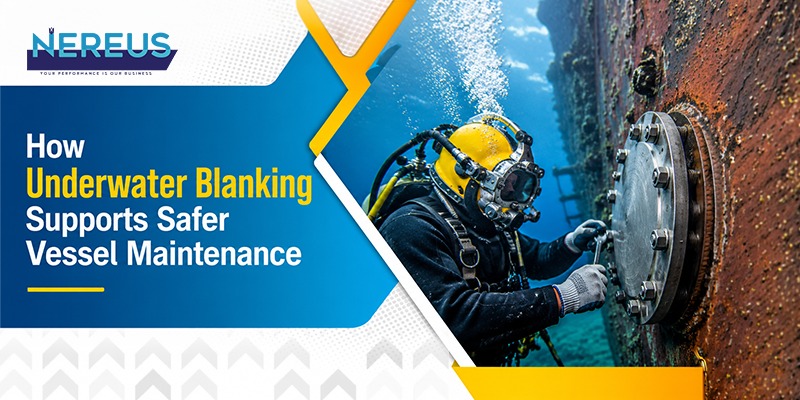
Why Underwater Blanking Matters in Modern Vessel Maintenance
Regular maintenance of a vessel’s underwater systems is important for ensuring safe operations and preventing unexpected equipment failures. Sea chests, seawater inlets, valves, pipelines and overboard outlets are continuously exposed to seawater, making them vulnerable to corrosion, wear and damage. These components may require periodic inspection, servicing or replacement. However, carrying out such work while a vessel is afloat can be difficult because the flow of seawater needs to be properly controlled.
This is where underwater ship blanking becomes a practical marine maintenance solution. It involves temporarily sealing underwater openings to isolate specific sections of a vessel’s seawater system before repair or inspection work begins. Depending on the application and safety requirements, this method can allow selected maintenance activities to be completed without taking the vessel out of the water, helping operators manage repair schedules and avoid unnecessary downtime.
What Is Underwater Ship Blanking?
Underwater ship blanking is a specialised technique used in marine maintenance to temporarily close underwater openings on a vessel. It involves installing a suitable blanking device over or within an opening to restrict seawater flow and isolate the section where maintenance is required.
This method is commonly considered for sea chests, seawater intake connections, valves, pipelines and other underwater openings. Professional diving teams select and position the appropriate blanking equipment based on the opening’s size, configuration, location and surrounding water conditions.
The main objective is to establish a secure temporary seal that helps prevent unwanted water flow and provides a controlled environment for the required maintenance activity.
Understanding Underwater Ship Plugging
While blanking and plugging are closely related, they are not always performed in exactly the same way. Underwater ship plugging generally involves using a suitable plug to block an underwater opening, pipe, or passage and prevent water from flowing through it.
The appropriate method depends on the design and location of the opening. Some applications may require a blanking arrangement, while others are better suited to a plugging system. A professional assessment helps determine which solution provides the most effective isolation for the planned repair.
Both underwater plugging and blanking are designed to help control water flow and create safer conditions for specific underwater maintenance activities.
How Underwater Blanking Supports Safer Repairs
Water ingress is one of the primary concerns when working on underwater vessel components. If an underwater opening is not properly isolated, seawater can enter the vessel or continue flowing through the system being repaired.
A correctly installed blank can provide a physical barrier against the surrounding water. This gives maintenance teams better control over the work area and helps reduce the risks associated with uncontrolled water flow.
For this reason, underwater blanking is particularly valuable when maintenance involves sea chest valves, seawater pipelines, intake systems, and other components directly connected to the sea.
Underwater Blanking and Sea Chest Maintenance
Sea chests are important parts of a vessel’s seawater systems. They allow seawater to enter the vessel for applications such as cooling and other operational requirements. Because they are directly exposed to seawater, sea chest components can require periodic inspection, maintenance, and repair.
Sea chest blanking can temporarily isolate the sea chest from the surrounding water, allowing suitable work to be carried out on connected valves, pipes, or other components.
By providing temporary isolation, underwater blanking can help maintenance teams address specific problems without automatically requiring the vessel to enter dry dock. The suitability of this approach depends on the vessel, repair requirements, underwater conditions, and safety assessment.
Can Underwater Blanking Reduce Dry-Docking Requirements?
Dry docking is an important part of vessel maintenance, but it can also involve considerable planning, cost, and operational downtime. Not every underwater repair necessarily requires a vessel to be placed in dry dock.
For suitable maintenance tasks, underwater ship plugging and blanking can provide temporary isolation while the vessel remains afloat. This can allow qualified underwater professionals to carry out selected repairs or component replacement without waiting for the next dry-docking period.
However, underwater blanking is not a replacement for dry docking in every situation. Major structural repairs, extensive hull work, or maintenance that cannot be safely performed underwater may still require dry-docking. A proper technical assessment should always be completed before deciding on an in-water repair solution.
Applications of Underwater Ship Plugging and Blanking
Underwater plugging and blanking can support a range of vessel maintenance requirements. Depending on the vessel configuration and the nature of the work, these solutions may be used for sea chest isolation, valve replacement, seawater pipeline maintenance, overboard discharge isolation, and other underwater openings.
They can also support certain repair activities involving sea chest plating and associated underwater components.
The correct equipment must be selected according to the opening’s dimensions, location, water depth, pressure conditions, and the specific maintenance activity being performed.
Improving Vessel Maintenance Efficiency
One of the biggest advantages of underwater blanking is the potential to improve maintenance efficiency. When a suitable repair can be completed while the vessel remains afloat, operators may avoid unnecessary interruptions to vessel schedules.
This can be particularly useful for vessels operating under tight schedules where extended downtime can affect logistics and operational commitments.
By combining underwater inspection, professional diving services, and suitable plugging or blanking equipment, vessel operators can develop a more flexible approach to underwater maintenance.
Underwater Blanking as Part of Preventive Maintenance
Underwater maintenance should not only focus on responding to equipment failures. Regular inspection can help identify corrosion, damaged valves, deteriorating pipework, and other underwater problems before they develop into more serious issues.
When an issue is identified, underwater ship blanking or plugging may provide a practical method of isolating the affected section for suitable repairs.
This makes underwater blanking a useful component of a broader preventive maintenance strategy, particularly for vessels that need to maintain reliable seawater and underwater systems.
Choosing the Right Underwater Blanking Solution
There is no single blanking solution that is suitable for every vessel. The correct approach depends on the type of opening, its dimensions, location, water depth, pressure, accessibility, and the nature of the planned maintenance.
An experienced underwater service provider can assess these factors and recommend the appropriate plugging or blanking method. Using equipment designed for the specific application can help provide effective water isolation and support safer maintenance operations.
Benefits of Underwater Ship Blanking for Vessel Operators
For suitable applications, underwater ship blanking can offer several practical advantages. It can help control water ingress, support underwater repairs, reduce unnecessary disruption, and potentially reduce the need for immediate dry docking.
More importantly, it provides maintenance teams with a controlled method of isolating underwater openings before work begins.
The actual benefits will depend on the vessel, the condition of the equipment, and the type of repair required. A professional assessment is therefore essential before selecting underwater blanking as a maintenance solution.
Why Choose Nereus Subsea for Underwater Plugging and Blanking?
Choosing the right underwater service provider is important when maintenance involves critical vessel openings and seawater systems. The work requires suitable equipment, proper installation techniques and an understanding of underwater operating conditions.
Nereus Subsea provides underwater plugging and blanking solutions for marine maintenance applications. These services support work involving sea chests, valves and other underwater openings, helping vessel operators explore suitable repair options without necessarily taking the vessel out of the water.
With application-specific equipment and professional underwater expertise, Nereus Subsea supports vessel maintenance requirements through practical underwater isolation solutions designed to improve repair efficiency and operational reliability.
Frequently Asked Questions
What is underwater ship blanking?
Underwater ship blanking is the process of temporarily sealing an underwater opening on a vessel to control or prevent seawater flow. It is used to support suitable inspection, maintenance, and repair activities while the vessel is afloat.
What is underwater ship plugging?
Underwater ship plugging involves using a suitable plug to block an underwater opening, pipe, or passage. It helps isolate the affected section from seawater during suitable maintenance operations.
What is the difference between underwater plugging and blanking?
Underwater blanking generally involves sealing an opening with a blanking device, while plugging typically involves placing a plug into or across an opening or pipe. The appropriate method depends on the vessel’s design and the specific maintenance requirement.
Can underwater ship blanking be used instead of dry docking?
For certain repairs, underwater blanking can allow work to be completed while the vessel remains afloat, potentially reducing the need for immediate dry docking. However, it is not suitable for every repair. The scope of work and vessel condition must be assessed by qualified professionals.
Is underwater ship blanking safe?
Underwater blanking can support safer vessel maintenance when the correct equipment, planning, risk assessment, and professional diving procedures are used. Because underwater operations involve specific risks, the work should be performed by experienced and appropriately qualified professionals.
Why is sea chest blanking important?
Sea chest blanking helps temporarily isolate a sea chest from surrounding seawater. This can help control water flow while suitable repair or maintenance work is carried out on valves, pipework, or related components.
Can underwater blanking reduce vessel downtime?
Yes. For suitable repairs, underwater blanking may allow maintenance to be completed while the vessel remains afloat. This can potentially reduce downtime and avoid unnecessary dry-docking for repairs that can safely be completed underwater.
Who should perform underwater ship blanking?
Underwater ship blanking should be performed by experienced underwater or commercial diving professionals with suitable equipment, training, and knowledge of vessel structures and underwater maintenance procedures.
Conclusion
Safe and effective water isolation is an important part of many underwater vessel maintenance operations. Underwater ship blanking provide practical methods for temporarily isolating underwater openings, helping maintenance teams control water flow and carry out suitable repairs while the vessel remains afloat.
When properly planned, installed, and managed by experienced professionals, these solutions can support safer maintenance, improve operational efficiency, and potentially reduce unnecessary dry-docking and vessel downtime.
Nereus Subsea provides specialist underwater plugging and blanking solutions designed to support marine maintenance requirements, including applications involving sea chests, valves, and other underwater openings. With the right technical approach and professional underwater support, vessel operators can maintain critical underwater systems more efficiently while keeping safety at the centre of every repair.