
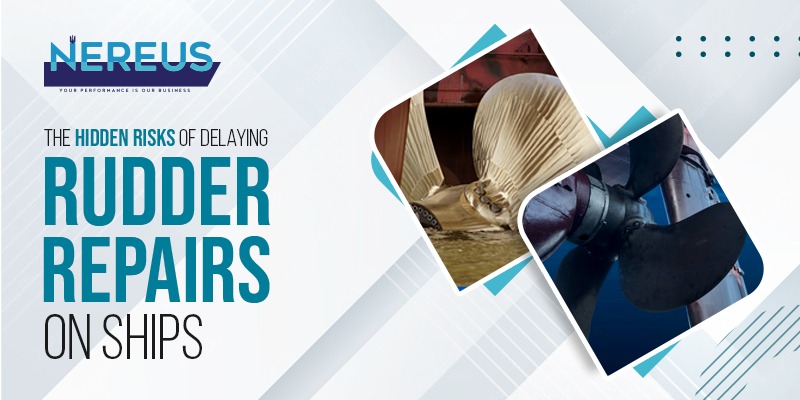
The rudder is one of the most critical components of a vessel’s steering system. Even a small issue can quickly escalate into a serious safety and operational hazard. Unfortunately, many ship operators delay maintenance or repair, often underestimating the risks involved. This delay can lead to costly damage, extended downtime, and in extreme cases, complete loss of control at sea.
At Nereus Subsea, we provide specialized rudder repair services, underwater repair services, and comprehensive underwater services designed to ensure vessels remain safe, efficient, and operational without unnecessary dry-docking.
Why the Rudder is So Critical
The rudder controls the direction of the vessel by redirecting water flow at the stern. It is constantly exposed to hydrodynamic pressure, corrosion, cavitation, and mechanical stress during operations. Because of its underwater position, damage often goes unnoticed until it becomes severe.
A minor crack, corrosion patch, or misalignment may seem insignificant at first, but under continuous stress, these issues can rapidly develop into major structural failures.
The Hidden Risks of Delaying Rudder Repairs
-
Structural Failure and Loss of Steering Control
One of the most dangerous outcomes of delayed rudder maintenance is structural failure. Cracks and corrosion can spread internally, weakening the rudder stock and blade. In severe cases, this may lead to partial or complete steering failure, putting the vessel, crew, and cargo at serious risk.
-
Increased Corrosion and Internal Damage
When rudder damage is ignored, seawater ingress can occur inside the rudder structure. This leads to internal corrosion, weakening of steel components, and hidden deterioration that is not visible during surface inspections. Over time, this can make rudder repair services more complex and expensive.
-
Higher Repair Costs and Dry-Docking Delays
Small defects can usually be corrected through underwater repair services without dry-docking. However, delaying repairs often results in severe damage that requires full rudder removal or replacement. This leads to higher costs and extended vessel downtime, affecting shipping schedules and operational efficiency.
-
Reduced Vessel Performance and Fuel Efficiency
A damaged or misaligned rudder increases drag and reduces steering efficiency. This forces the propulsion system to work harder, leading to higher fuel consumption and reduced overall performance.
-
Safety and Environmental Risks
A compromised rudder increases the risk of collisions, grounding, or navigation failure especially in congested or rough sea conditions. Such incidents not only endanger lives but can also result in environmental damage and regulatory penalties.
Importance of Early Inspection and Maintenance
Regular underwater inspections play a vital role in identifying early signs of rudder damage. Issues such as pitting corrosion, cracks, deformation, or water ingress should be addressed immediately.
With advanced underwater services, these problems can often be repaired efficiently without interrupting vessel operations. Early detection significantly reduces repair costs and extends the life of the rudder system.
Conclusion
Delaying rudder repairs is never a cost-saving decision it is a risk that grows with time. What starts as a minor defect can quickly escalate into major structural failure, operational downtime, and safety hazards.
Regular inspections and timely intervention using professional rudder repair services and underwater services are essential for safe and efficient vessel operations.
At Nereus Subsea, we are committed to ensuring your vessel remains seaworthy, reliable, and ready for operation anytime, anywhere.